

What is hybrid training? | Preparation phases | The right equipment | Strength and conditioning | Recovery | Common mistakes | Ready for your training?
HYROX is not just a running race and not just strength training; it is the combination of both that makes the sport so challenging. Eight 1-kilometre runs, alternating with eight functional stations such as sled push, wall balls and farmers carry. Those who prepare for this with running alone will lack strength at the stations. Those who only do strength training will struggle after just a few kilometres. The solution is called hybrid training: an approach that deliberately combines endurance and strength, so your body can handle both without one coming at the expense of the other.
What is Hybrid Training and why does it work for HYROX?
Hybrid training means that during the same period, you train both cardio and endurance as well as strength and muscular endurance. Instead of dedicating an entire training block to running or strength training, you build a week in which both complement each other.
For HYROX, this is not a choice but a necessity. Every station requires strength, while the kilometres of running in between keep your heart rate high. So you are not judged on your best 1K time or your heaviest sled push, but on how well you can combine those two things when you are already tired. That is exactly where a hybrid approach makes the difference: you train your body to produce strength while already fatigued from running, and to run smoothly again after completing a heavy station.
The phases of your Hybrid preparation
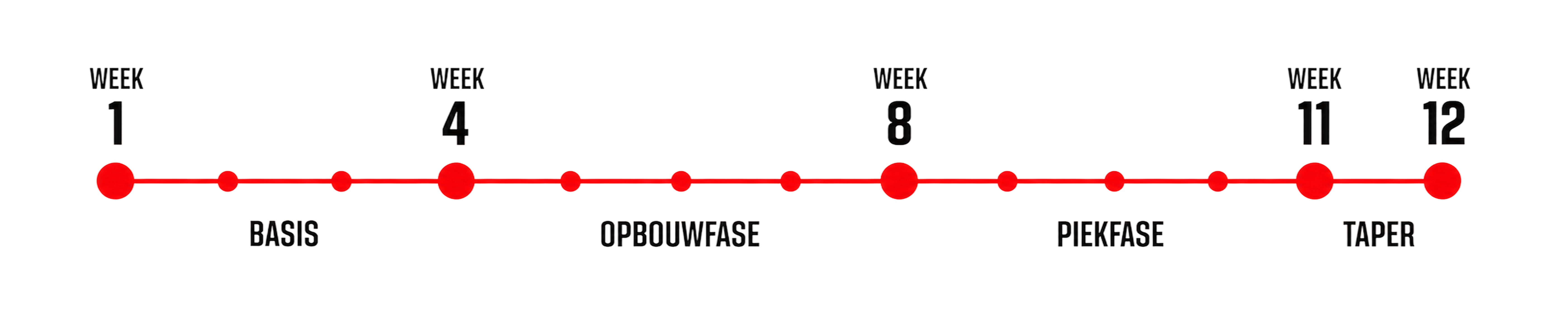
Good preparation is built in phases. You start broad and simple, becoming increasingly specific as the race approaches. Below is the thinking behind each phase, so you can decide for yourself how to translate this into your own schedule and level.
Phase 1: Base
In the first phase, you build a solid aerobic base and develop strength and technique at the stations. Keep the weights light at this stage, so you can keep refining your exercise technique rather than focusing on heaviness. For running, gradually increase your distance: never increase by more than 10% per week to prevent injuries and overtraining.
During this phase, you also do a short workout combining running and stations. This is your first introduction to hybrid training, where you start getting used to compromised running: running on legs that have just been taxed by a station.
Phase 2: Build phase
In this phase, you continue to expand your aerobic base, while deliberately adding interval training: shorter, faster sprints alongside your longer endurance runs. You will also truly start building your strength now, with heavier weights and greater load at the stations.
Hybrid workouts become an increasingly important part of your programme here. You place more focus on workouts that combine running and stations, so you get better and better at compromised running. This is exactly where you make the difference on race day.
Phase 3: Peak phase
In the peak phase, your focus shifts to race pace and simulations. Your aerobic base workouts become less frequent, and when running, you focus primarily on the pace you want to maintain on race day. Keep strength at a moderate level: you do not build further, but maintain what you have developed.
This leaves room for good recovery and keeps you fresh enough to handle the longer hybrid workouts and simulations, combining multiple stations and running laps just as you will encounter in the race.
Phase 4: Taper
In the final phase, you significantly reduce your training load, so you arrive fresh at the start of your race. You reduce intensity across the board: less running, moderate strength work and a small hybrid workout instead of a long simulation.
This phase is not about making further gains, but about giving your body the rest to recover from the build-up, so you are sharp and energetic at the starting line.
Train with the right equipment
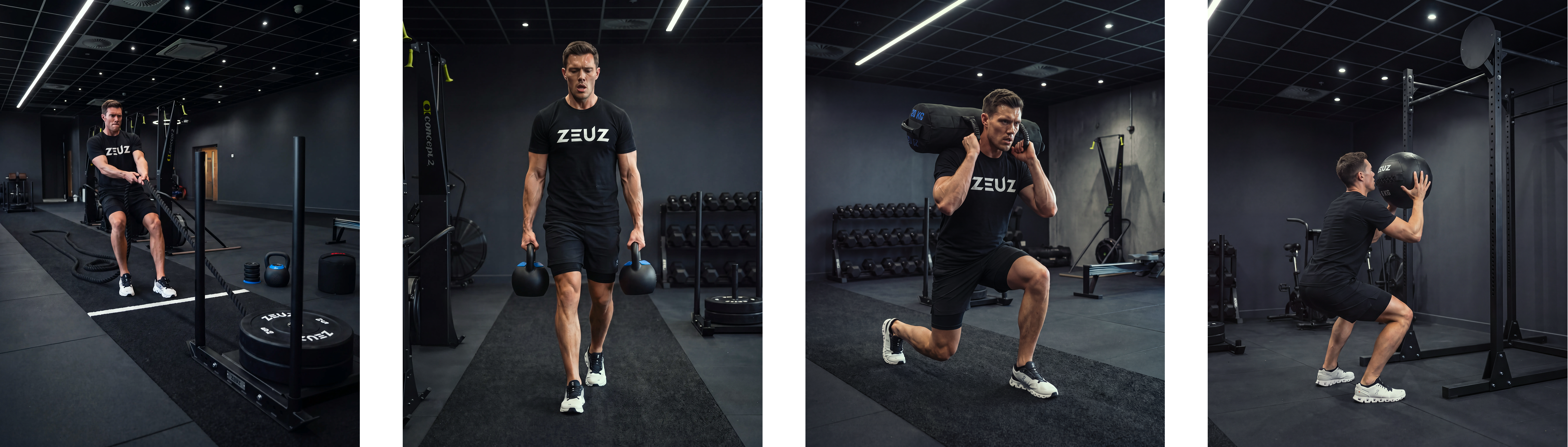
To train compromised running and the eight stations properly, you need the right equipment at home or in the box.
- Sled push and pull: train with a power sled, so you learn to generate force from a low position while your heart rate is already high.
- Wall balls: practise with a ball at the right weight, so you can refine your reps and rhythm without your technique suffering from fatigue.
- Farmers carry: you need something genuinely heavy to walk with; a kettlebell in each hand works best.
- Sandbag lunges: simulate the unstable load of the race as realistically as possible with a sandbag.
If you are already an advanced runner, you can also choose to add extra resistance to your workouts by wearing a weighted vest.

Combining strength and conditioning without overtraining
The art of hybrid training lies in balance. Too much volume in both disciplines at once is the fastest route to overtraining, injuries or stagnation. A practical rule of thumb is to divide your week into sessions with a clear main goal: several days focused on strength, several on endurance, and one to two days combining both in a HYROX-style format. This gives your body the chance to become genuinely stronger or more enduring on the "pure" days, while the combined sessions prepare you for the specific demands of the race.
Pay attention to signs such as persistent fatigue, declining performance or an elevated resting heart rate. These indicate that you should temporarily reduce your volume or intensity.
Recovery: the underestimated pillar
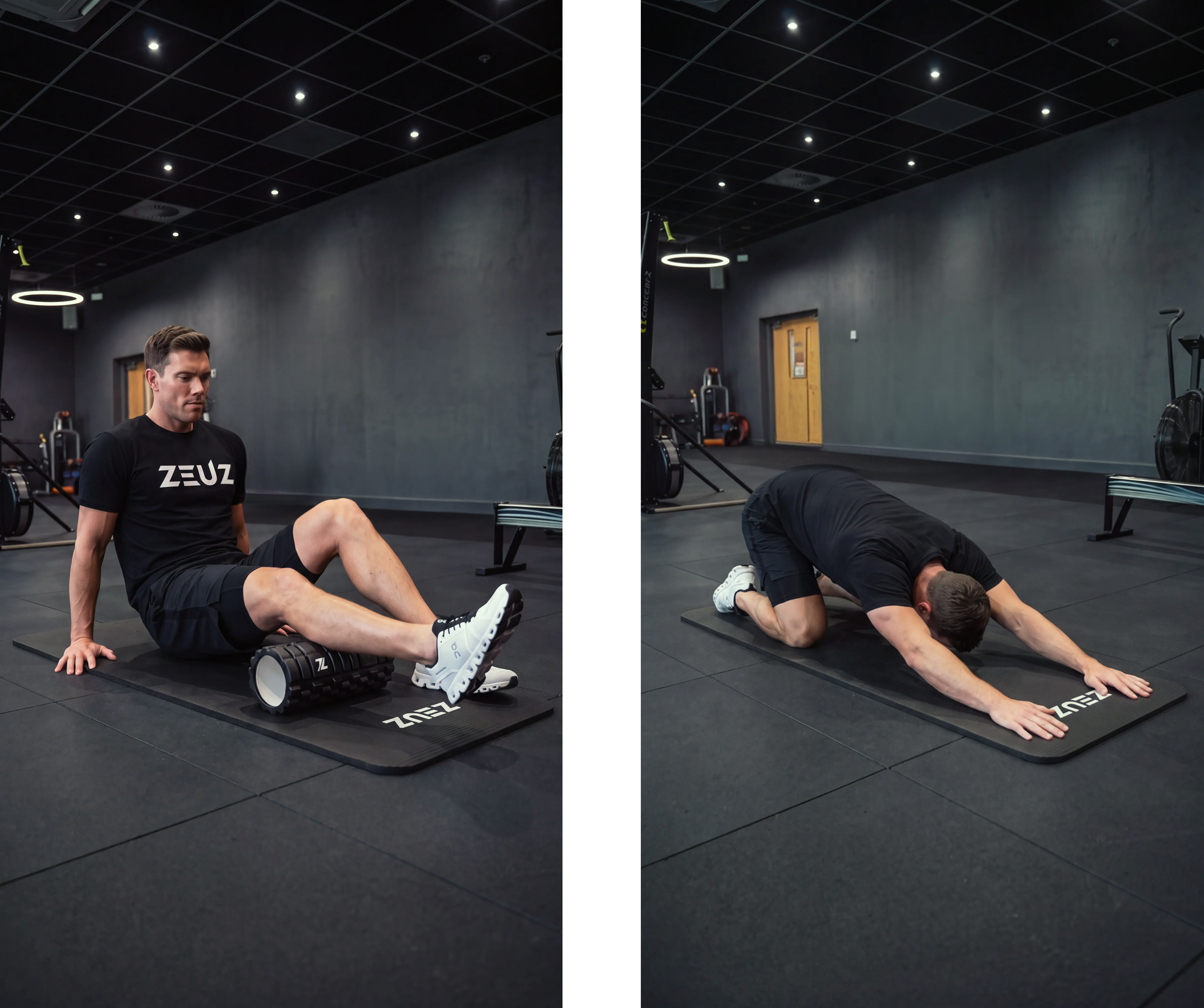
With hybrid training, you tax your body on two fronts at once, which makes recovery even more important. Adequate sleep is the most underestimated training variable: during sleep, muscle tissue recovers and your body processes the demands of the day. Also deliberately schedule rest days and use active recovery, such as an easy walk or light mobility exercises, to stimulate blood flow without adding extra stress.
Mobility deserves specific attention in HYROX, because stations such as the sled push and burpee broad jumps place high demands on your hips, ankles and shoulders. A few minutes of targeted mobility exercises after your workout helps prevent injuries and maintains your flexibility for the next session.
Common mistakes in Hybrid Training for HYROX
Several pitfalls come up frequently:
- Increasing volume too quickly in both strength and conditioning. Your body needs time to adapt to the combined load.
- Consistently ignoring recovery. Those who treat every workout like a race do not build sustainable progress.
- Lack of periodisation. Athletes keep training at the same intensity for weeks instead of deliberately progressing through the phases from base to peak to taper.
Ready for your Hybrid Training?
With a good build-up, sufficient recovery and the right equipment, you lay the foundation for strong HYROX preparation. View the full ZEUZ Hybrid Training collection and find everything you need to build strength and conditioning with purpose.


